
Color Removal Chemicals
Color removal chemicals, also known as decolorizing agents, are used to remove or reduce color from various substances, particularly wastewater and industrial effluents. These chemicals work by neutralizing the color-causing compounds, causing them to clump together and settle out of the solution. Common types include coagulants, flocculants, and oxidizing agents.
How they work:
Coagulation:
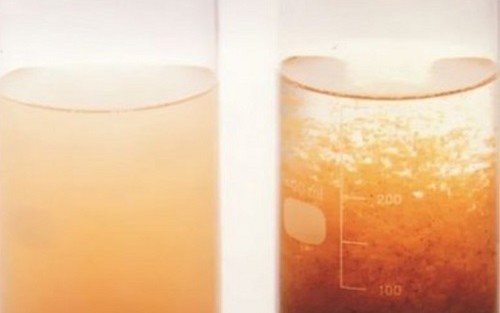
Color removal chemicals, often cationic (positively charged), neutralize the negative charge of colloidal particles (like dyes) in wastewater, causing them to clump together.
Flocculation:
These larger clumps (flocs) then attract and bind with more particles, forming larger, heavier flocs that can be easily removed by settling or filtration.
Oxidation:
Some color removal chemicals, like certain bleaching agents, oxidize the color-causing compounds, breaking them down into colorless or less colored substances.
Types of Color Removal Chemicals:
Cationic Polymers: High molecular weight polymers that provide a positive charge to neutralize negatively charged colloids. Examples include polyamines and polyDADMAC.
Anionic Polymers: Used in conjunction with cationic polymers to enhance flocculation and sedimentation.
Fenton's Reagent: A mixture of hydrogen peroxide and ferrous sulfate, which generates hydroxyl radicals that can oxidize a wide range of organic pollutants, including dyes.
Sodium Hydrosulfite: A reducing agent used in textile and paper industries to decolorize dyes.
Activated Carbon: A porous material that adsorbs color-causing compounds.
Ozone: A powerful oxidizing agent that can break down a wide range of pollutants, including dyes.
Applications:
Wastewater Treatment: Essential for treating textile wastewater, dyes, and other industrial effluents to meet discharge standards and enable water reuse.
Textile Industry: Used to remove color from dyeing processes and wastewater.
Paper Industry: Used to decolorize pulp and paper mill effluents.
Food and Beverage Industry: Used to remove color from juices, wines, and other food products.
Hair Color Removal: Some color removal chemicals are specifically formulated to remove artificial hair dye.