
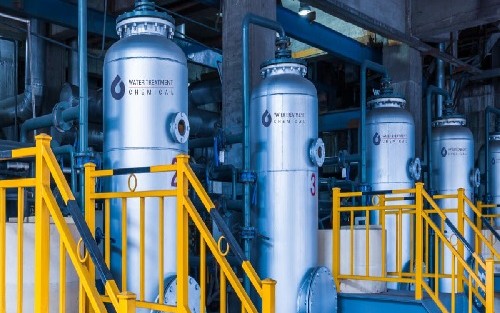
Boiler Chemicals
Boiler chemicals are specialized compounds added to boiler systems to manage water quality and prevent operational issues like scale buildup, corrosion, and oxygen contamination. These chemicals are crucial for maintaining boiler efficiency, preventing damage, and ensuring safe operation.
Here's a more detailed description:
1. Purpose: Boiler chemicals are designed to:
Control water chemistry:
Maintain optimal pH levels, prevent scale formation, and remove dissolved gases like oxygen that can cause corrosion.
Protect boiler components:
Inhibit corrosion on metal surfaces, preventing pitting and premature failure.
Improve heat transfer:
Reduce scale buildup, which can act as an insulator and hinder heat transfer efficiency.
Ensure steam purity:
Prevent carryover of impurities into the steam, which can affect downstream processes and equipment.
2. Types of Chemicals:
Oxygen Scavengers: Remove dissolved oxygen to prevent corrosion. Examples include sodium sulfite and hydrazine.
Scale Inhibitors: Prevent the formation of scale deposits on heat transfer surfaces. Examples include phosphates and polymers.
Corrosion Inhibitors: Protect boiler metal surfaces from corrosion. Examples include amines and filming amines.
Alkalinity Builders: Adjust and maintain the pH of boiler water to prevent corrosion. Examples include sodium hydroxide and potassium hydroxide.
Chelants: Bind with metal ions to prevent scale formation.
Dispersants: Help to keep suspended solids from settling and accumulating.
Flocculants: Aid in the removal of suspended solids by promoting clumping.
3. Delivery Methods:
Internal Treatment: Chemicals are directly injected into the boiler feedwater or steam.
External Treatment: Water is treated before it enters the boiler, often using methods like demineralization or reverse osmosis.
4. Importance:
Increased efficiency:
By preventing scale and corrosion, boiler chemicals help maintain optimal heat transfer and reduce energy consumption.
Extended lifespan:
Protection against corrosion and scale buildup can significantly extend the life of the boiler.
Reduced downtime:
Preventing failures and maintenance issues can minimize costly downtime.
Safe operation:
Properly treated water helps ensure the safe and reliable operation of the boiler system.
5. Examples:
Boiler Guard: A brown, alkaline solution containing sodium hydroxide and diethyl ethanolamine, used for scale and corrosion inhibition and oxygen scavenging.
Chelants (like EDTA): Bind with metal ions to prevent scale formation.
Tannins and lignosulfonates: Act as dispersants and can also scavenge oxygen.
Amines (like morpholine, diethylaminoethanol, and cyclohexylamine): Neutralize acidic condensate and prevent corrosion.